
Research Focus
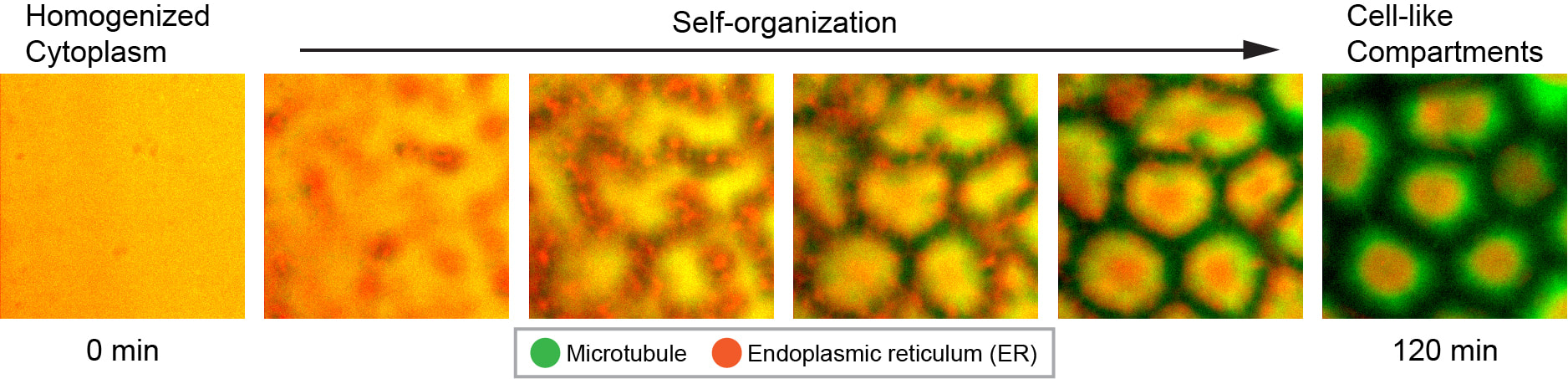
How do cytoplasmic components assemble into biologically functional spatial architecture? This is difficult to answer using live cells as they always inherit pre-existing spatial architectures from mother cells. We have discovered that frog (Xenopus laevis) egg extracts, which are cell-free lysates that contain all essential components of the cytoplasm at their native concentration, can self-assemble spatially organized, biologically functional cytoplasm (Read the article here). In addition, egg extracts can be biochemically manipulated, making them a powerful model system for understanding how functional cytoplasmic architecture self-organize.
We seek to uncover the design principles of living cellular systems by dissecting the mechanisms of self-organization in frog egg cytoplasm. These principles will be instructive to the engineering of synthetic living systems, and may shed light on the origin of cellular life.
(1) How is the microtubule (MT) and endoplasmic reticulum (ER) organization in the cytoplasm generated and maintained?
(2) What sets the intrinsic length scale of self-organized cytoplasmic patterns such as the mitotic spindle?
(3) How do self-organized MT and ER structures coordinate the cell cycle?
(4) How can we leverage self-organization to build synthetic cells?
Using Xenopus egg extracts, we discovered that diffusion of protein-sized molecules (but not molecules much smaller or larger in size) becomes much faster in spatially organized cytoplasm compared to scrambled cytoplasm. Thus, self-organization could enable a broad range of biochemical reactions that would otherwise be too slow to be physiological (Read the article here).
We found that cell-like compartment formation begins with the emergence of microtubule asters with an unusual "plus-end-at-center" polarity (in contrast to the "minus-end-at-center" polarity of the classic centrosome-nucleated asters). These asters localize to the borders between cell-like compartments and recruit cytokinesis proteins to their centers, producing spatially focused cytokinesis signals without a mitotic spindle (Read the article here).
Approach
The lab takes a multidisciplinary approach to address the research questions. We use:
The lab takes a multidisciplinary approach to address the research questions. We use:
- Molecular biology, biochemistry, cell biology and engineering tools to probe in vitro and in vivo experimental model systems.
- in vitro: Xenopus egg extracts
- in vivo: Xenopus oocytes, eggs, cultured cells and embryos; C. elegans embryos; Sea urchin eggs and embryos.
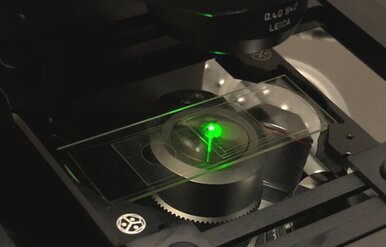
- Time-lapse live imaging to characterize the dynamics of cytoplasmic components.
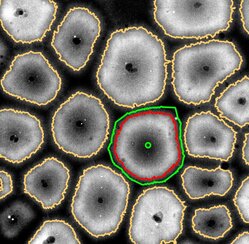
- Computational image processing to quantitatively analyze the microscopy data.
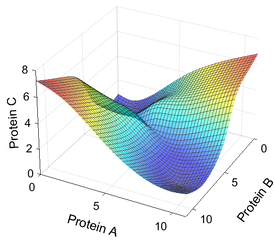
- Mathematical modeling to understand mechanisms underlying the experimental observations and to generate novel, experimentally testable predictions.
|
Live Imaging
|
Quantitative Image Analysis
|
Mathematical Modeling
|
